BlizzCon 2026: Expectations for World of WarcraftBlizzCon returns to the Anaheim Convention Center on September 12 and 13, 2026, marking the first full in-person gathering since 2023. After years of limited or online-only events, the convention arrives at a meaningful moment for the Warcraft franchise. Retail World of Warcraft currently sits in the middle of the Worldsoul Saga. The War Within has concluded and Midnight serves as the live expansion. The Last Titan, long positioned as the saga’s concluding chapter, remains the most closely watched future release, with no official date announced but a widely anticipated window in 2027–2028. Classic progression continues along its established path, while high-credibility development signals surrounding a possible Classic++ experience have grown more consistent in the months leading into the show. Broader franchise questions—including the potential for additional Warcraft titles and longer-term discussion of a true successor—add further significance to the weekend. 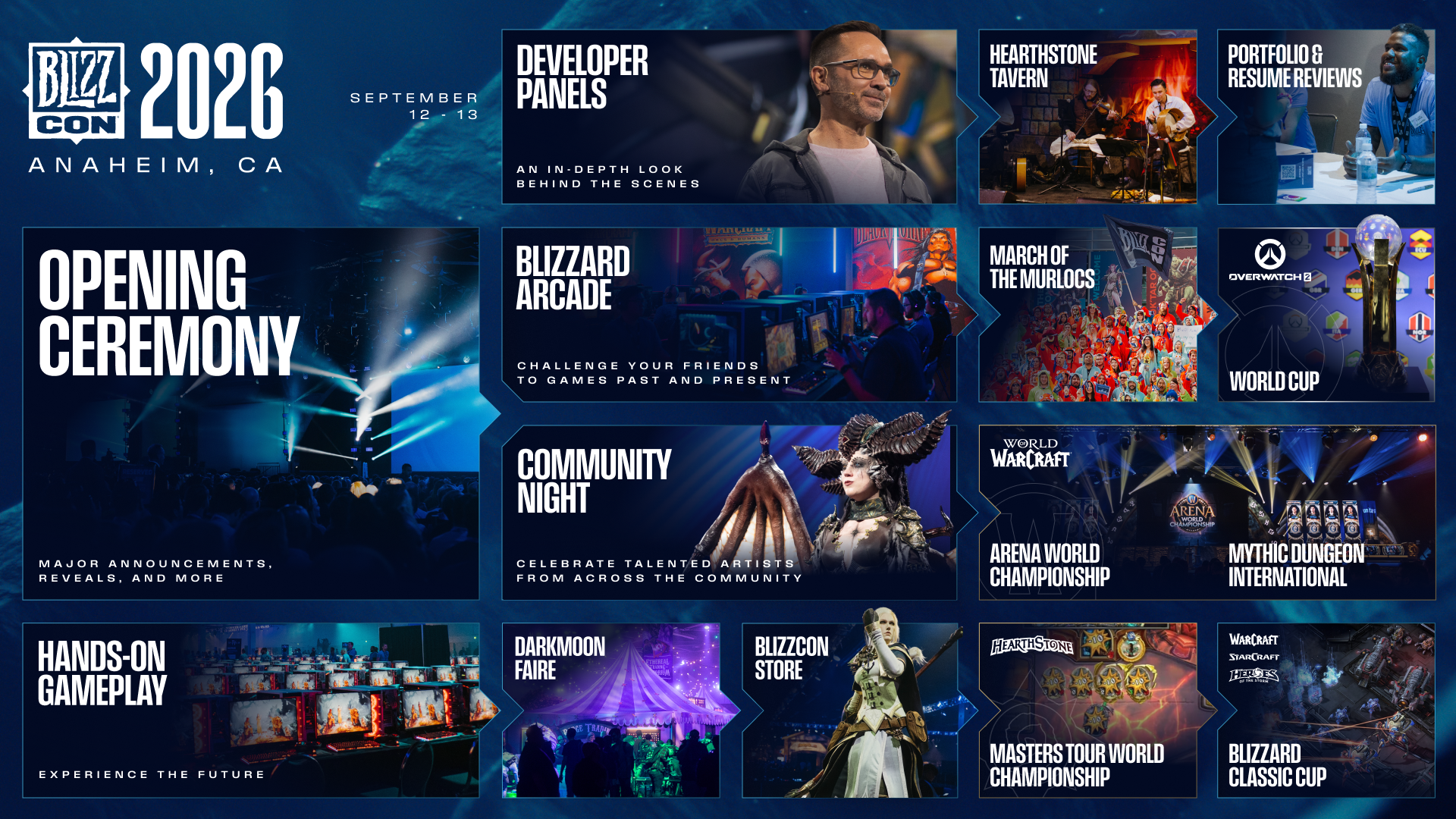 The opening ceremony and supporting panels are expected to form the core of the official program. Developers have already indicated that Retail coverage will address the near-term patch cycle, including testing and details around 12.1.5, further information on 12.1.7, a look ahead to 12.2, and commentary on the longer direction of the live game. A substantive discussion of Northrend in the context of The Last Titan is considered highly likely, given the expansion’s confirmed full redesign of the continent, the central role of Ulduar, and the narrative focus on the Titans’ intentions toward Azeroth and its worldsoul. Hands-on stations, systems previews, and community question-and-answer sessions traditionally accompany these reveals and remain probable features of the schedule. On the Classic side, sustained internal build activity associated with the Project Camelot codename, related vendor-server observations, private-server enforcement patterns, and repeated developer comments have produced the strongest indicators yet of a living Classic++ style offering. Blizzard has not confirmed the project. Nevertheless, the volume and consistency of signals have led many observers to treat a related announcement or focused deep dive at BlizzCon as a realistic possibility. Any such reveal would hold immediate interest for communities that value the original design language while remaining open to carefully selected quality-of-life and content expansions. Beyond the two primary tracks, the convention is expected to include the familiar mix of developer panels, esports competitions, hands-on gameplay experiences, community showcases, and festival-style activities. Special guests and musical performances have already been announced and will appear across various activations. Exclusive digital and physical BlizzCon bundles featuring mounts, transmog ensembles, and cosmetics for World of Warcraft and other titles will serve as the traditional rewards for attendees and remote viewers. For organizations that coordinate large groups of members, these elements provide both practical incentives and shared cultural moments that extend beyond the formal program. The broader franchise conversation will also draw attention. Speculation of varying credibility has circulated regarding additional Warcraft projects, sometimes referenced under working titles. A full “World of Warcraft 2” remains unconfirmed. The more grounded discussion centers on whether Blizzard intends to expand the intellectual property with new narrative or alternative progression experiences while preserving the health of the core MMO. Any clarification on these fronts would be of direct interest to long-running communities that track the overall trajectory of the franchise. Throughout the weekend, the tone and presentation of announcements will be examined as carefully as the specific content. Many veteran players continue to measure new direction against the craft, mythic weight, and conflict-centered sensibility of the early Warcraft real-time strategy games and the original World of Warcraft cinematics. The classic Blizzard polish philosophy—tight systems, evocative world-building, and a clear sense of place—produced some of the most enduring moments in the genre. A return to that foundation remains a priority for a substantial portion of the player base. Ruin Gaming’s History of Advocacy and the Long ViewRuin Gaming approaches BlizzCon 2026 with the institutional memory of a community present in World of Warcraft since the earliest days of Vanilla and active in coordinating attendance across multiple convention cycles. Founded in the early 2000s around Diablo II and expanded into Warcraft from launch, the organization has treated the game as a serious long-term competitive and social space. Our records document repeated member gatherings, post-event analysis, and a consistent internal mandate: to offer measured, experience-based feedback aimed at strengthening the systems that sustain engagement across years rather than short seasons. That advocacy has centered on meaningful conflict and the conditions that once made the open world feel contested and alive. In the early years, open-world player-versus-player interaction was woven into the geography and daily rhythms of Azeroth. The ongoing friction around Tarren Mill and Southshore in the Hillsbrad Foothills created a living frontier where new players encountered faction conflict through repeated skirmishes and occasional large-scale clashes that emptied the towns for hours. Blackrock Mountain functioned as a natural choke point and raid-adjacent battleground, where the steady flow of players traveling to Blackrock Depths, Blackrock Spire, Molten Core, or Blackwing Lair guaranteed regular encounters. City raids, though often chaotic, carried symbolic weight because the act of assaulting an opposing capital represented a visible assertion of faction presence that resonated across the server. The Burning Crusade refined these foundations by introducing purpose-built open-world objectives. In Hellfire Peninsula the towers at the Overlook, the Stadium, and Broken Hill created clear strategic goals. Control of all three granted a zone-wide damage buff that extended into the Hellfire Citadel instances, directly linking outdoor fighting to progression incentives. In Zangarmarsh, the Twin Spire Ruins required coordinated beacon captures followed by a flag run to the central tower, producing contested ground that rewarded organization and persistence. These systems demonstrated that open-world conflict could move beyond unstructured encounters into structured yet still emergent warfare. Wrath of the Lich King expanded the concept further with Wintergrasp, a large-scale outdoor player-versus-player zone built around siege warfare. The battle for control of the keep, the construction and deployment of vehicles, the defensive advantages of elevated positions, and the subsequent access to the Vault of Archavon and exclusive vendors created a distinctive rhythm of faction conflict. Alongside Wintergrasp, the expansion sustained a robust battleground ecosystem and retained enough residual open-world risk that travel through contested zones continued to carry tension. Ruin’s feedback over the years has consistently returned to these principles. We have argued for stronger War Mode incentives, open-world objectives that carry tangible consequences, progression systems such as Bloody Tokens and associated gear that provide dedicated player-versus-player players a clear path, war crate drops, and player-versus-player-oriented world quests that draw participants into contested spaces. We have pointed to successful large-scale designs in other titles—including Guild Wars 2’s World-versus-World structure, Dark Age of Camelot’s realm conflict, Rift’s dynamic events, and the high production values of narrative presentation in games such as Star Wars: The Old Republic—as evidence that purpose-driven conflict remains viable in modern massively multiplayer games. At the same time we have welcomed the addition of player housing and community neighborhoods, recognizing that creative and social spaces can coexist productively with competitive systems when the core fantasy of the world remains one of genuine stakes. We acknowledge that Blizzard has demonstrated increasing willingness in recent years to incorporate constructive critique into quality-of-life improvements and system iterations. That progress is real and worth recognizing. Yet we continue to hold reservations about tonal drift and the occasional intrusion of contemporary framing that can distance the fiction from the grim, mythic, and conflict-centered foundation established in the original intellectual property. The early cinematics and the Warhammer-adjacent sensibility of the classic Warcraft games remain the reference point for many long-time players. A return to that tenor, grounded in craft rather than external messaging, would strengthen the franchise’s long-term position. As BlizzCon 2026 unfolds, Ruin members attending in person or following the proceedings remotely will examine announcements for Retail patch direction, deeper information on The Last Titan, any clarification surrounding Classic++ concepts, and broader franchise signals with an eye toward whether they reinforce the conditions that once made open-world conflict feel essential. Continual improvement is iterative. We do not expect every historical strength to be restored in a single weekend. What matters is the overall trajectory. Ruin will coordinate attendance through established community channels, gather observations from those present, and publish post-event analysis that measures new information against the long record of player behavior and retention we have observed. Members planning to travel can find coordination details on the events section of the guild website. Those following from home are encouraged to apply the same standards of careful observation and experience-based critique. The Warcraft franchise has endured by periodically returning to the elements that first captured players’ imaginations. BlizzCon 2026 offers another opportunity to continue that conversation with clarity and resolve. o7 |