Official video: Grand Theft Auto VI Launch Trailer (Rockstar Games on YouTube) By RUIN Gaming Editorial Desk | Launch Week Analysis — November 20, 2026 Grand Theft Auto VI arrived on November 19, ending a thirteen-year wait with extraordinary critical acclaim. Its launch-week Metacritic score stood at 99/100 as of November 20, based on 152 critic reviews, placing it among the most highly rated games ever reviewed. Yet beneath that consensus, a more complicated conversation is emerging among players—and for a multi-game community like RUIN Gaming, that conversation carries strategic weight. GTA VI is an extraordinary technical achievement. Leonida is a remarkably detailed world, and Rockstar has pushed environmental presentation, character rendering, animation, and simulation to new heights. But the game also arrives with a 30-frames-per-second console performance target, a campaign that tightly couples its two protagonists, and a single-player-only launch. Those decisions matter. Particularly to players who have spent years treating Grand Theft Auto not simply as a story to complete, but as a sandbox in which to establish identities, build enterprises, choose associations, and create experiences beyond the boundaries of Rockstar’s authored narrative. For RUIN, the question is not whether GTA VI is technically impressive. It plainly is. The question is whether the design direction and eventual online ecosystem will deliver the freedom that made the franchise such an attractive community platform in the first place. Visual Fidelity Versus the 30 FPS Constraint
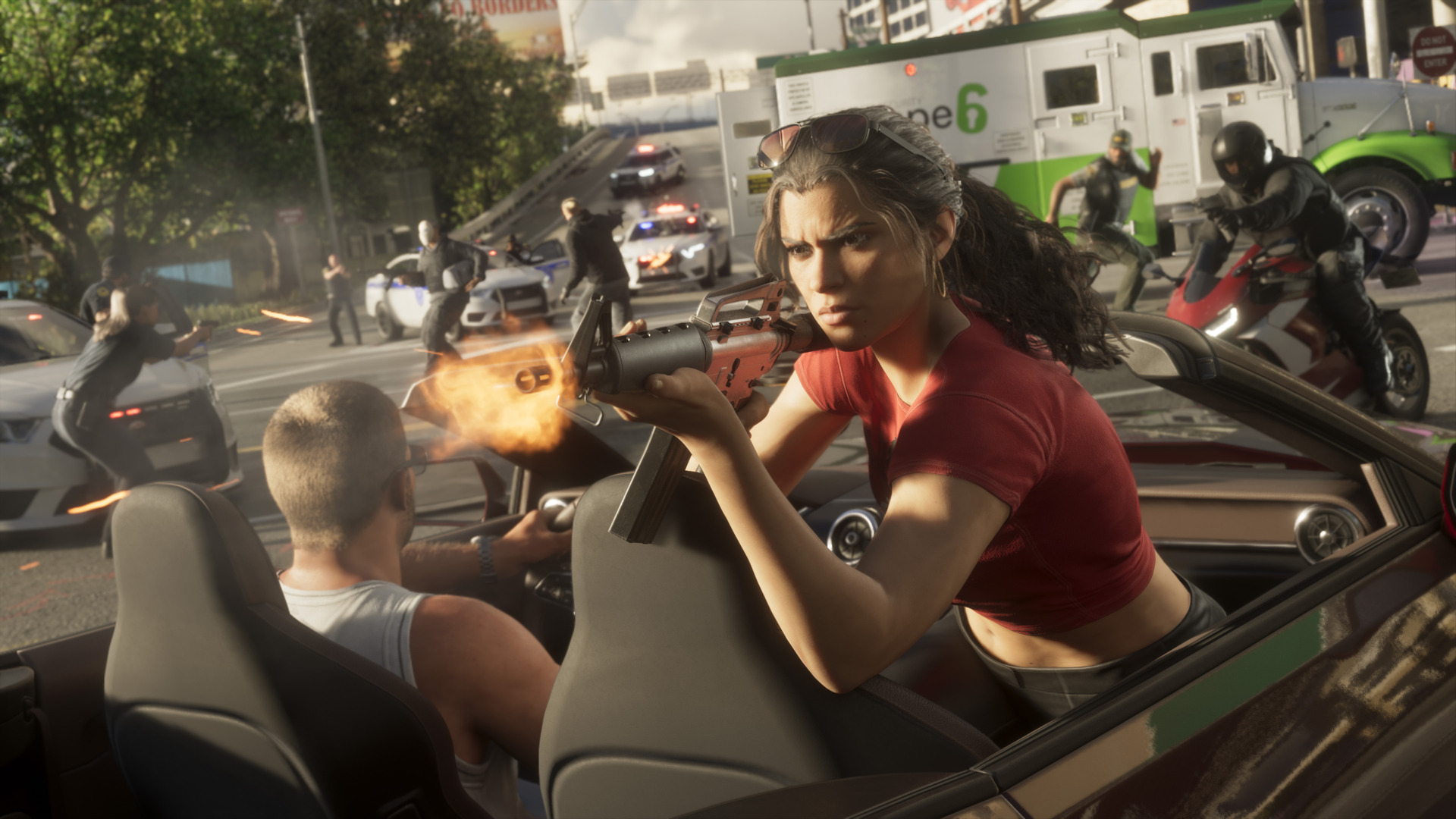
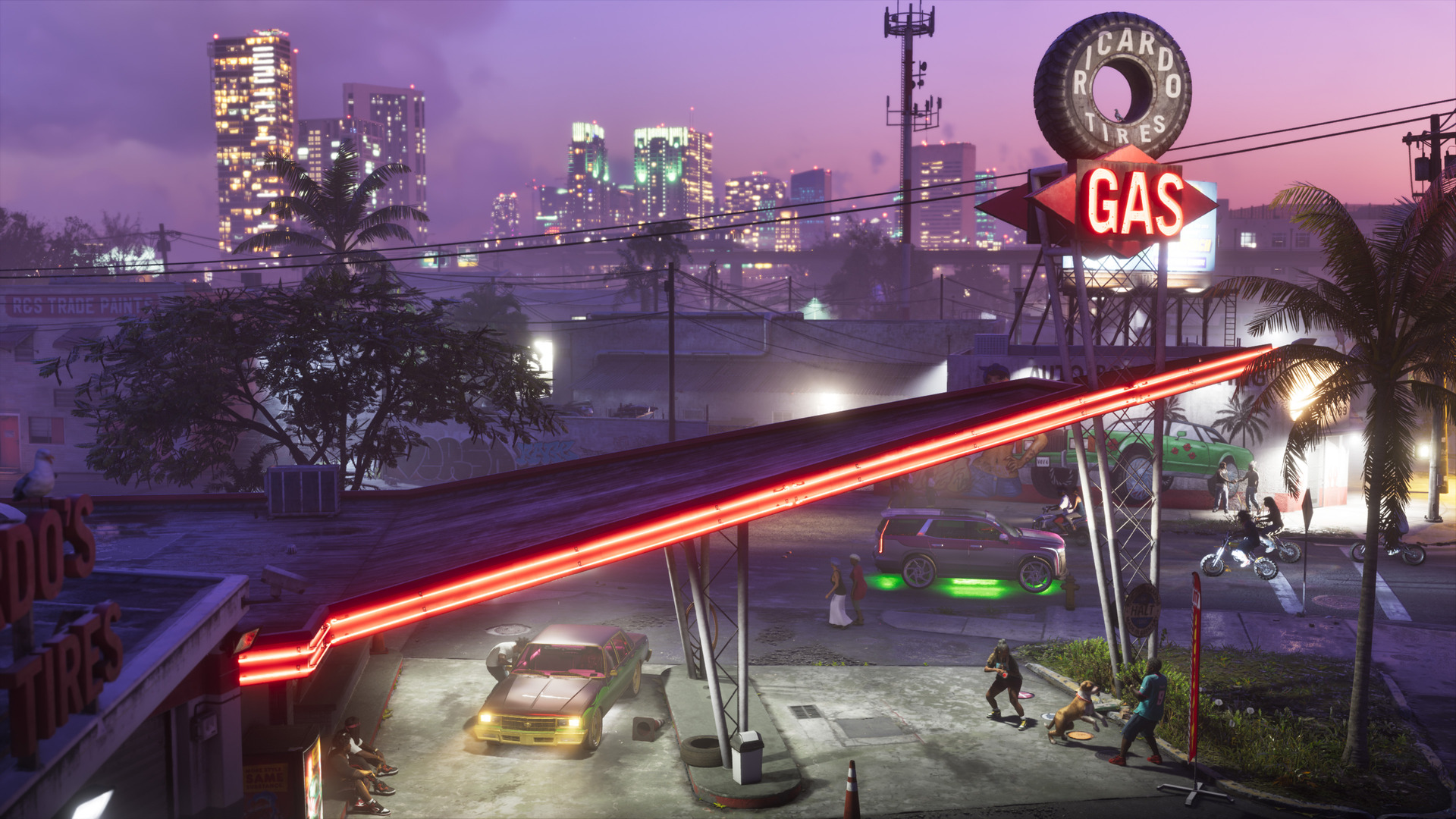
Rockstar has established a new high-water mark for open-world visual density. Leonida is richly layered, with detailed environments, sophisticated lighting, high-quality character rendering, and a world populated by crowds and activities that give the setting a convincing sense of life. The scale and fidelity are impressive. The technical cost, however, is apparent. Rockstar confirmed before launch that the console versions were targeting 30 frames per second. The studio explained that the target was intended to preserve the density and visual fidelity of the world. There is no 60 FPS performance mode at launch. The resulting experience varies by hardware. Technical analysis from Digital Foundry indicates that the PlayStation 5 Pro generally delivers the most consistent performance, although demanding scenes can still produce drops. The base PlayStation 5 and Xbox Series X exhibit more frequent dips below 30 FPS, while Xbox Series S faces more substantial compromises in resolution, detail, and performance during demanding sequences.
This is not a trivial distinction. GTA V’s Enhanced edition offers a 60 FPS performance option on current-generation consoles. Returning to a 30 FPS target for a flagship release in 2026 represents a meaningful compromise in responsiveness for players accustomed to higher refresh rates. The visual achievement deserves recognition. So does the trade-off. A PC version has not been announced with a confirmed release date. For players with high-end gaming systems, that leaves an important part of the technical conversation unresolved. The world may be more detailed than ever, but fidelity is not the only measure of technical quality. Responsiveness matters, too. Achievements and Trophies: Offline Purity, Checklist StructureOne welcome decision is the emphasis on single-player completion. The PlayStation 5 trophy list contains 55 trophies, including the Platinum award, with the full set earned through the offline campaign. This avoids requiring completionists to participate in a separate online economy simply to complete the base game’s achievement list. That is a positive change for players who prefer to keep their single-player experience self-contained. The structure still raises questions about the balance between exploration and checklist completion. Collectibles, stunts, vehicle-related challenges, miscellaneous objectives, and other completion requirements add substantial work beyond the main campaign. Certain achievements also reinforce the central partnership between the protagonists. A potentially missable early trophy, along with restrictions associated with cheat codes, introduces additional friction for completionists. The offline emphasis is welcome. The volume of checklist activity and the extent to which the campaign reinforces its central relationship are less universally appealing. A completion list should encourage players to explore a world. It should not become a substitute for meaningful freedom within it. The Core Critique: Agency, Not Gender
The most important launch-week criticism is not an objection to a female protagonist, nor is it an expectation that Grand Theft Auto characters should be virtuous or morally admirable. Lucia Caminos can be ruthless, demanding, manipulative, selfish, ambitious, or morally compromised. Those traits are entirely appropriate for Grand Theft Auto. Nobody buys a GTA game expecting its protagonists to be role models. Jason Duval can be weak, conflicted, compromised, or drawn into circumstances beyond his control. That can also make for compelling storytelling. The underlying issue is player agency. Jason and Lucia are written into a circumstance-locked partnership whose terms frequently require accommodation of the other protagonist’s decisions and priorities. The player has limited meaningful ability to disagree, establish boundaries, refuse participation, or pursue an independent direction without running into the fixed structure of the campaign. A dysfunctional relationship can be excellent story material. Being required to perpetually facilitate that relationship is a different gameplay proposition. The distinction becomes more pronounced when optional domestic activities—house repairs, groceries, flowers, and related preparation—are connected to relationship systems and incentives. These activities are optional, and neglecting them does not prevent story progression. But optional activities can still shape the experience through rewards, incentives, and the way the game frames its protagonists. Our objection is not that domestic simulation has no place in a game. It is that these systems risk turning a criminal sandbox into a series of domestic obligations when the player has limited ability to meaningfully redirect the relationship that makes those obligations relevant. There is a fundamental difference between a character’s authored personality and the player’s available choices. A protagonist can be deliberately weak, compromised, or morally conflicted. The player should still be given interesting decisions about how to navigate those circumstances. A character’s lack of agency can be an intentional storytelling device. A player’s lack of agency is a game-design decision. The same criticism would apply if the roles were reversed. Rockstar has said the romance systems are optional and that players can reject them. That explanation is relevant, but it does not eliminate the underlying concern. Optional romantic gestures are not the same as optional attachment. The player can decline certain activities while still being required to participate in the central partnership that drives the campaign. Circumstance, rather than elective association, drives the entanglement. GTA V vs. GTA VI: How Sandbox Freedom Narrowed
In GTA V, if one character’s drama became exhausting, players could switch protagonists, pursue other activities, acquire property, build vehicle collections, and engage with different parts of the world. The three-protagonist structure created distinct perspectives and gave players a degree of flexibility that was central to the experience. The ability to move between characters helped the world feel larger than any single narrative relationship. GTA VI takes a different approach. Its two protagonists are tightly connected by the story, and the campaign places their relationship at the centre of the experience. That may produce a more cohesive narrative. It also narrows the player’s ability to step away from the central interpersonal dynamic. These are different design philosophies. One is not automatically superior in every respect, but the trade-off deserves scrutiny—particularly from players who value the sandbox as much as the authored story. The RUIN Community Reaction: From Anticipation to Disappointment
Before launch, GTA VI represented a substantial opportunity for RUIN Gaming. There was genuine enthusiasm around evaluating the game as a major community activity, building on our history with GTA V and potentially establishing recurring Friday and Saturday night events. The possibility of private-community environments, where technically and commercially feasible, organized activities, player-created identities, and a shared criminal sandbox made GTA VI an attractive candidate for a new flagship. That was always an evaluation opportunity, not a confirmed promise of Rockstar-supported private servers. That enthusiasm has been considerably diminished. Launch-week discussions across our Discord community have been more concerned and reluctant than anticipated. Streamer coverage, X creators, and widely circulated gameplay clips have amplified skepticism around the relationship dynamics, Jason’s position within them, and the degree to which the player is expected to accommodate Lucia’s decisions. It is important to distinguish direct community feedback from the wider social-media conversation. RUIN’s discussions are not a representative survey of the entire GTA player base, and we do not claim that every player shares these concerns. But the change in enthusiasm within our own community is real. There is a practical consequence. Our interest in GTA VI was never exclusively about completing another Rockstar single-player campaign. We were evaluating its potential as a shared gaming environment and a foundation for recurring community activities. A compelling single-player production does not automatically translate into a compelling multiplayer community platform. Players who prefer PC gaming, customized characters, independent identities, and community-organized activities have limited incentive to invest heavily in a console-oriented, single-player-only release that does not yet provide the multiplayer and customization possibilities they want. The absence of a confirmed PC release date, alongside the lack of a confirmed multiplayer launch window or Rockstar-supported private-server framework, further complicates the decision. We should not confuse future possibilities with delivered features. Rockstar has built an extraordinary environment. Whether it becomes an equally extraordinary platform for player-created identities, independent social groups, and organized community gameplay remains an open question. Our community was looking forward to another GTA playground. What it has encountered so far is a more prescribed experience than many of our players anticipated. What This Means for RUIN GamingRather than a blanket dismissal or an unearned commitment, RUIN Gaming’s approach to GTA VI rests on three separate decisions.
We are not ruling out GTA VI. We are refusing to commit to a community platform that has not yet demonstrated that it can support the kind of community experience we want to build. The Seven-Point Test for Rockstar’s Future PC and Multiplayer EcosystemGTA V succeeded as a community platform because its sandbox became the foundation for experiences that extended far beyond Rockstar’s authored story. It allowed communities to establish their own identities, rules, associations, and events. The ability to create experiences beyond the original campaign helped make the game relevant to communities long after the initial release. Before RUIN Gaming commits to GTA VI as a long-term multiplayer hub, Rockstar’s eventual PC and online offering will need to answer seven concrete questions:
These are not unreasonable expectations for a franchise that has already demonstrated the value of a persistent multiplayer ecosystem. Until Rockstar confirms these features and their actual implementation can be tested, we will not assume they exist. Preliminary RUIN Gaming VerdictThe issue with Grand Theft Auto VI is not simply that Rockstar introduced domestic chores or wrote an uncomfortable relationship. It is that the combination of restrictive narrative design, reduced protagonist independence, 30 FPS console bottlenecks, and the absence of a confirmed community-oriented PC ecosystem has diminished enthusiasm among players who originally saw GTA VI as a generational opportunity. We didn’t spend thirteen years waiting for another opportunity to perform someone else’s domestic obligations. We were waiting for another Grand Theft Auto sandbox: a world in which we could establish our own identities, pursue our own ambitions, build our own criminal enterprises, and decide who we wanted to associate with. Rockstar still has an opportunity to make GTA VI an extraordinary community platform. But visual fidelity, critical acclaim, and an elaborate single-player narrative cannot substitute for player freedom. The question for RUIN Gaming is no longer simply whether GTA VI is a great game. It is whether GTA VI is a game our community actually wants to play together. GTA VI may be an outstanding single-player production and still be a disappointing proposition for a community whose primary interest is shared gameplay, private-server possibilities, player-created identities, and recurring organized events. That distinction is central to how RUIN evaluates the title. Editorial methodology: This is a launch-week assessment dated November 20, 2026. Aggregate review scores and technical performance findings are time-sensitive. Community observations refer to RUIN Discord discussions and are not presented as a representative survey of all GTA players. Future PC, multiplayer, dedicated-hosting, and private-server capabilities are treated as unconfirmed unless Rockstar announces and delivers them. |