Western Game & Entertainment Industry Reform – Crisis, Collapse, and the Merit-Driven Path to Renaissance
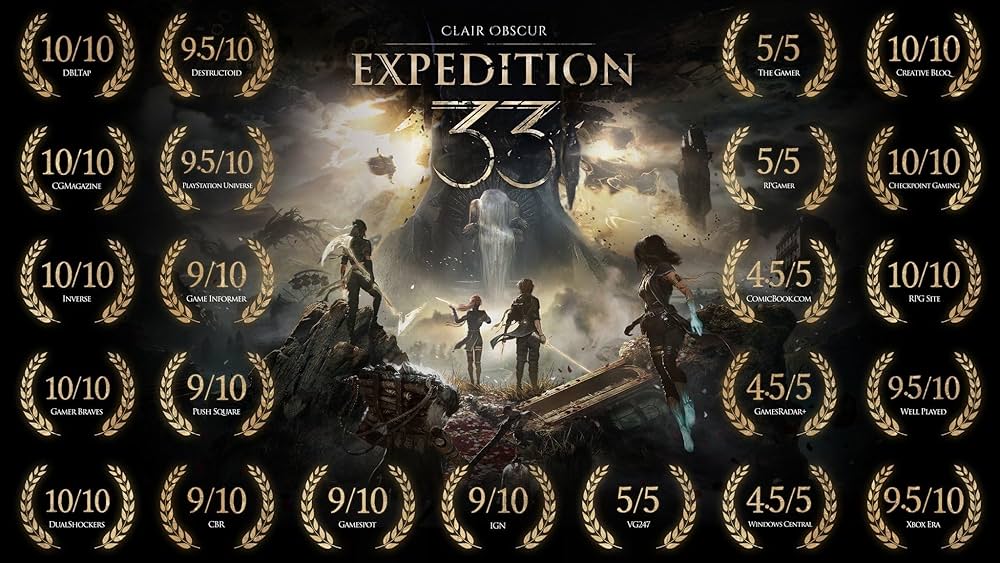
The Uncomfortable Truth: A Hostile Takeover in Plain SightIt is uncomfortable, even career-risky in many corporate circles, to confront these issues directly. The topics—race, gender, demographics, ethnicity, and the raw tribal mechanics of who gets to tell stories and who gets pushed aside—are inherently charged, partisan, and emotional. They trigger immediate accusations of bigotry the moment anyone questions the prevailing narrative. Yet executives cannot afford to look away simply because the conversation has been draped in the sacred veneer of “social justice” and “civil rights.” Pretending otherwise is professional negligence. These are not abstract academic debates; they are active, measurable interventions in billion-dollar cultural assets that shape how entire generations see themselves and their heritage. Institutional Capture and Cross-Media PushbackGaming, film, streaming, and pop culture IPs do not exist in silos—they share the same Hollywood/AAA pipelines, ESG consultants, activist writers, and internal HR enforcers. The ideological machinery that captured Star Wars (The Acolyte’s lore-ignoring DEI casting, “lesbian space witches,” and race/gender reimaginings that prioritized messaging over canon), The Lord of the Rings (Rings of Power’s race-swapped elves and dwarves in Tolkien’s Northern European mythic world), Star Trek (Discovery and Starfleet Academy’s overt identity lectures and demographic swaps that produced catastrophic ratings), and Warhammer 40k (female Custodes additions and lore-bending debates) has now fully colonized gaming. The result is identical: established IPs treated as blank canvases for demographic replacement and propaganda rather than coherent worlds. Pushback has been fierce and effective. Anti-woke boycotts and coordinated review bombs — amplified on X and Steam — have repeatedly forced concessions and cancellations. Steam data ruthlessly repudiates any “strong market desire” for woke disasters: Concord peaked under 700 concurrent players before total shutdown; Dustborn launched to a catastrophic 83-player peak; Dragon Age: The Veilguard and Assassin’s Creed Shadows cratered retention. These flops expose how unsustainable budgets are gutted by DEI diversions and creative drag. The market has spoken: merit and fidelity win; propaganda loses. Beneath the Rhetoric: A Consistent PlaybookBeneath the polished rhetoric lies a consistent playbook: demographic replacement, mean-spirited cultural trolling, deliberate immersion-breaking, and outright vandalism of established IPs. Straight white male or European-coded characters are systematically sidelined, race-swapped, gender-flipped, or aesthetically downgraded to satisfy DEI checkboxes, while the reverse never occurs. Qualified talent is replaced by activists who treat fidelity to canon as optional. This is not organic evolution. It is concerted sophistry: framing every objection as “hate” while prioritizing ideological quotas over merit and commercial viability. The result is fan-fiction masquerading as canon. From an executive standpoint, this is a hostile takeover — foreign in nature and openly colonial in intent — attempting to overwrite traditional Western culture under the guises of “equity” and “decolonization.” Decision makers must treat it as such. Executive SummaryThe Western AAA gaming industry is in freefall. One-third of U.S. game developers were laid off in the past two years according to the GDC 2026 State of the Game Industry Report, with over 14,000 jobs cut in 2024 and persistent waves into 2025 — amid $2.8+ billion in writedowns. High-profile disasters like Concord ($400M, shut down in 14 days), Dragon Age: The Veilguard (89K peak to ~800 DAU), Star Wars Outlaws, Assassin’s Creed Shadows, and Amazon’s New World: Aeternum expose systemic rot: bloated teams, coordination waste, vertical progression traps, DEI/ESG distractions, and politicized narratives that alienate the core 18–44 male demographic. Meanwhile, Asia and indies thrive: Black Myth: Wukong (~$1B), Clair Obscur: Expedition 33 (5.2M sales, 9 TGA wins), and Hades II (98% reviews). Indies captured 48% of Steam’s $4B 2024 revenue. Survival demands ruthless customer focus: merit-only hiring, evergreen design, gameplay-first priorities, and rejection of fringe ideologies. Decision makers must execute a 24-month “Ruin to Renaissance” roadmap and reform ESG/DEI mandates — or perish. Documented Pattern of Swaps and Demographic/Ideological ReplacementsThe pattern of alteration in established intellectual properties is unmistakably one-directional, with European-coded characters consistently serving as the default targets for systematic change. In Star Wars: The Acolyte, heavy DEI-driven casting and overt messaging took clear precedence over established lore fidelity. The Lord of the Rings: Rings of Power inserted race-swapped elves and dwarves into Tolkien’s Northern European mythic setting. Assassin’s Creed Shadows elevated Yasuke as a co-lead samurai in feudal Japan. Dragon Age: The Veilguard featured androgynous character designs, extreme DEI sliders, and multiple overt political scenes. Concord pursued a pronoun-heavy approach to “inclusive” design that came at the direct expense of fun and broad audience appeal. These changes are not genuine attempts at updating stories for modern audiences. They represent deliberate cultural vandalism that actively fuels widespread audience rejection and commercial failure. Crisis Metrics: Western Collapse vs. Asian/Indie RenaissanceWestern AAA development in 2025 operates under fundamentally unsustainable conditions when compared against the leaner, more effective models driving Asian and indie success. Typical Western teams balloon to between 1,000 and 1,900 personnel, while Asian and indie counterparts routinely deliver comparable or superior results with only 33 to 400 developers, representing a staggering 70 to 98 percent reduction in organizational bloat. Budgets routinely climb into the $200–500 million range for Western titles, yet Asian and indie projects achieve breakout hits on $10–70 million, delivering 90 to 98 percent greater efficiency. Content from Western releases becomes 90 to 95 percent obsolete shortly after launch, whereas Asian and indie successes create evergreen experiences that retain relevance and revenue for 10 to 20 years or more, generating effectively infinite return on investment. Revenue per employee languishes below $680,000 in the West compared with $1.4 to $2.3 million among outperforming studios, a differential exceeding 200 percent. Steam review scores for Western flops hover between 1.6 and 3.9 out of 10, while Asian and indie titles routinely achieve 80 to 98 percent positive ratings, underscoring a truly catastrophic performance gap. DEI and ESG quotas only worsen this crisis by diverting an additional 5 to 10 percent of already strained budgets while alienating the core payer base, with internal polls showing that 76 percent of players explicitly reject the injection of politics into escapist entertainment. ESG Effects and Heavy Messaging: Worst Examples and Real DamageESG scoring has functioned as a de facto mandate across the industry, explicitly tying access to capital to diversity quotas that routinely override creative merit and commercial priorities. In Star Wars: The Acolyte, a $230 million production dominated by messaging priorities produced the franchise’s lowest-ever audience scores, triggered rapid viewership collapse, and ultimately led to outright cancellation. Star Trek’s Discovery and Starfleet Academy similarly transformed core themes of exploration into vehicles for activism, delivering poor ratings and subsequent cancellations. Identical patterns of heavy-handed ideological insertion have played out across Rings of Power, Warhammer 40k, and numerous AAA gaming titles. The resulting damage is both immediate and structural: massive financial writedowns and studio closures, rapid audience retention collapse paired with permanent alienation of core payers, a creative talent exodus coupled with stifled innovation, and heightened fiduciary liability, regulatory exposure, and vulnerability to boycotts. Why This Pattern Is UnacceptableThis pattern is unacceptable on multiple interlocking levels. It is inherently discriminatory and antagonistic because it imposes a strictly one-way racial and gender litmus test that never applies in reverse. It is immersion-breaking by design, as propaganda elements shatter the internal consistency and believability of carefully constructed fictional worlds. It constitutes outright cultural vandalism through the systematic replacement of merit with ideological checkboxes. Most critically, it cannot be defended as social justice: the retrofitting of legacy intellectual properties represents nothing less than top-down colonization of established Western storytelling traditions. Measurable Backlash and Market RealityBoycotts and coordinated review bombs have repeatedly proven to be highly effective market corrections, demonstrating that audiences possess both the agency and the platforms to enforce accountability. Steam data decisively exposes the fiction of any broad underlying demand for woke titles, while major non-woke successes such as Hogwarts Legacy, which surpassed 30 million sales, and Black Myth: Wukong continue to prove that audiences overwhelmingly reward fidelity to source material, gameplay excellence, and unapologetic entertainment value. Leadership Tools for Repeal, Rollback, and ReformProven leadership tools drawn from successful transformations in other industries provide a clear and actionable toolkit for meaningful change. These include public merit-first pledges paired with explicit neutrality charters that enshrine “gameplay first, no agendas” as the operating principle, internal DEI audits accompanied by hard sunset clauses, shareholder resolutions that tie executive compensation exclusively to verifiable financial KPIs, regulatory and state-level leverage to counter external ESG pressures, talent reclamation programs and merit-only hiring pipelines, the establishment of genuine player councils with real decision-making influence, and legal as well as insurance protections for teams that prioritize commercial and artistic integrity over activist demands. From Ruin to Renaissance – 24-Month RoadmapThe transformation unfolds across three disciplined phases. In Phase 1: Prune and Reset (Q4 2025 through Q1 2026), studios must undertake mass delayering to cap teams at 200 to 400 elite developers, implement strict merit-only hiring while eliminating DEI and ESG quotas along with their associated consultants, adopt a neutral creative stance that bans immersion-breaking lectures and pronoun mandates, complete a full migration to modern Unreal Engine 5 or equivalent high-fidelity engines, and stand up player councils for validation. Phase 2: Rebuild Foundations (Q2 through Q3 2026) shifts focus to horizontal progression systems and evergreen design principles, deploys AI strictly as a productivity multiplier that remains subordinate to human polish, launches a remasters pipeline built on the new engine foundation, and rolls out AA flagship projects executed exclusively by lean teams. Phase 3: Scale and Dominate (Q4 2026 onward) realigns the overall portfolio so that traditional AAA represents no more than 20 to 30 percent while AA and indie-style efforts rise to 40 percent or higher, embeds evergreen live-service systems from the outset, pursues global market plays that emulate the most successful Asian models, and centers marketing around quality-driven virality. Success is tracked against clear KPIs: sustained concurrent player counts of 50,000 or more, Steam review scores of 80 percent positive or higher, and three-to-five times return on investment. Failure to hit these thresholds by 2028 will force any remaining operations into maintenance mode. RecommendationDecision makers must reject DEI/ESG-driven swaps and ideological insertions and instead commission bold new original stories. They should immediately deploy the leadership tools outlined above to repeal, rollback, and reform these policies. The merit-driven 24-month roadmap must be executed with urgency: pipelines should be audited for activist capture, fidelity to canon should be enforced where appropriate, and every decision should be measured by engagement, sales, and player satisfaction rather than activist checklists. Use Clair Obscur: Expedition 33 as the explicit blueprint and North Star. Western studios still possess unmatched IP libraries and talent. They can reclaim leadership, but only if they execute with courage and clarity. The data is unambiguous: audiences want compelling experiences, not cultural re-education. The alternative to decisive reform is continued decline and irrelevance. This Decision Maker Brief synthesizes GDC 2026 data, Steam metrics, studio announcements, Luminate viewership, and industry analysis. For proprietary modeling or board presentation decks, further research is available. |