RUIN Gaming Guild Meeting Notes – September 8, 2026
Welcome to the RUIN Gaming Community. Established in 2004.
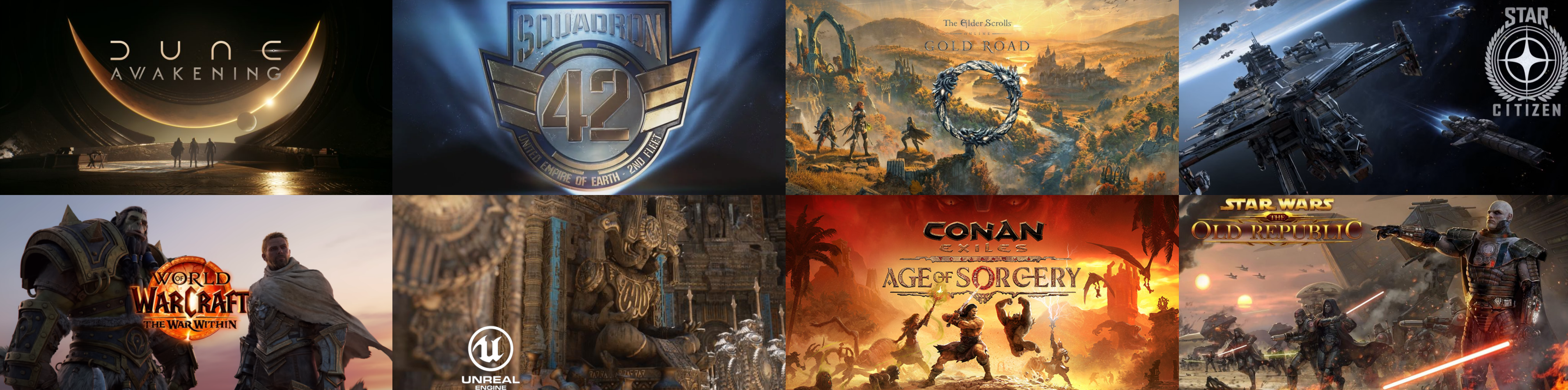
BlizzCon 2026BlizzCon is more than an event: it’s a homecoming. It’s a celebration of the stories we’ve shaped, the worlds forged together, and the friendships and bonds that make this gathering so unforgettable. Whether this is your first time attending BlizzCon or a long-awaited reunion with friends and fellow community members, there’s more time than ever to plan and personalize your experience. We’re thrilled to welcome you to what’s shaping up to be an incredible event. World of Warcraft + DLSS 5The video features the Human starting area, Elwynn Forest and Goldshire at night. Captured using a WoW 3.3.5a HD client combined with NVIDIA DLSS 5 Neural Rendering and a custom 3-pass rendering setup. The goal of LevelUpscale is to see how far modern rendering and AI-based graphics technology can push both old and new games while keeping the actual gameplay and environments recognizable. No pre-rendered footage – this is running in real time in-game! The RUIN community meets every Tuesday at 6:00 PM Pacific Time on Discord. These meetings serve to recognize outstanding members for promotion, review the operational status of our primary titles, examine relevant developments across the gaming industry and supporting technology, and establish clear priorities for the week ahead. This particular meeting falls four days before the opening of BlizzCon 2026 and approximately two weeks after the live deployment of Star Citizen Alpha 4.10. The practical question before the organization remains the same one we have asked for more than two decades: which systems reward the sustained investment of disciplined, large-scale coordination, and how do we position ourselves to extract maximum value from those systems while protecting the culture that has sustained us since 2004. RUIN was founded during the launch year of World of Warcraft and assumed its present name during the Warhammer Online campaign. Across more than twenty years the organization has maintained a consistent identity centered on large-scale coordinated gameplay, loyalty, and the deliberate elevation of collective competence above individual spectacle. That standard continues to shape every evaluation we make of the games we inhabit and the companies that produce them. Our operating identity remains concise and unambiguous: Ruin Gaming | PvP is our business.
Discord Meeting Schedule
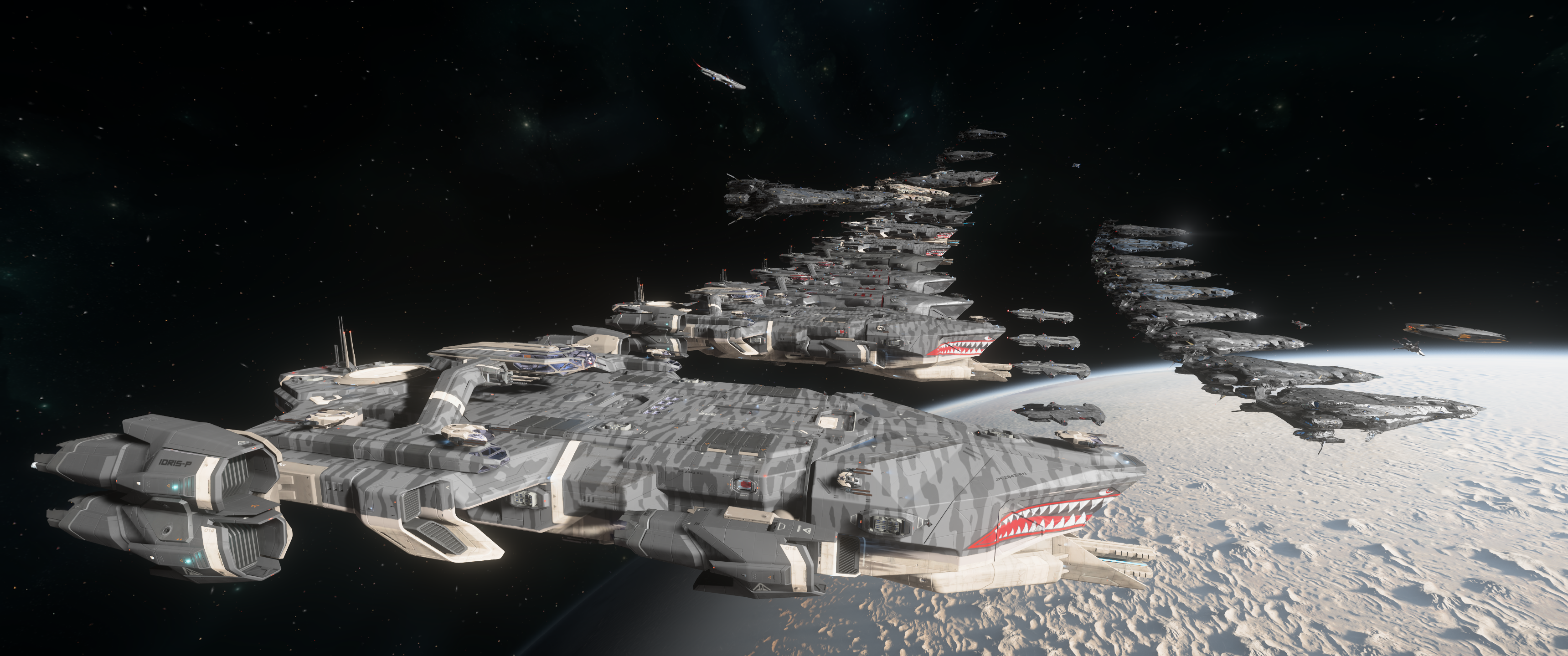
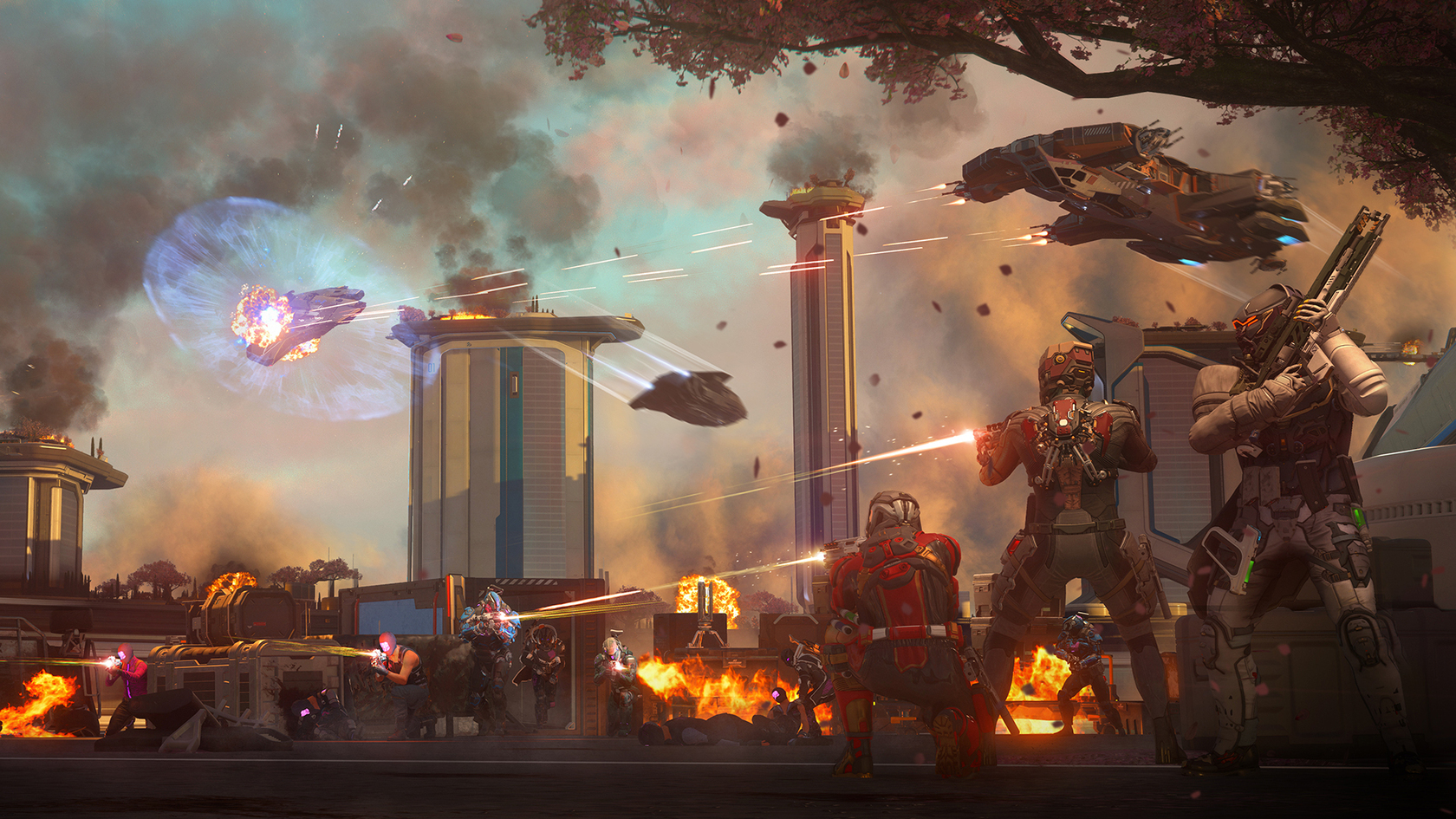
Star Citizen – Alpha 4.10 in Practice and the Approach of Alpha 4.11Alpha 4.10 reached the Persistent Universe Live servers on 26 August 2026. The patch delivered Siege of Orison as a true on-demand instanced FPS operation, introduced the Super Heavy Combat Armor set and the Apocalypse Arms Vendetta heavy machine gun, executed a comprehensive rebalance of fuel capacities and consumption rates, adjusted vehicle armor and weapon values, and incorporated a substantial volume of stability and exploit remediation. For RUIN the significance of this release extends well beyond any single feature. It marks the point at which several months of doctrinal preparation transition into daily operational practice. Hathor site control continues to serve as the central prime-time PvP expression of the organization. The Contested Zones to Executive Hangars pipeline remains the primary route for Wikelo ship acquisition while simultaneously training multi-role coordination. Siege of Orison now occupies the front of the recruit evaluation sequence, providing a controlled environment in which new members demonstrate movement discipline, loadout competence, communication standards, and objective focus before exposure to the higher-variance conditions of live Hathor sites. Capital crews on the Idris and Polaris lines are incorporating the revised fuel and engineering demands into pre-flight routines. Super Heavy and Vendetta combinations remain under active study for sustained ground defense, while fighter packages continue refining counters to the still-relevant Guardian QI and size-five Deadbolt threat profile. Star Citizen Alpha 4.10 Patch Notes
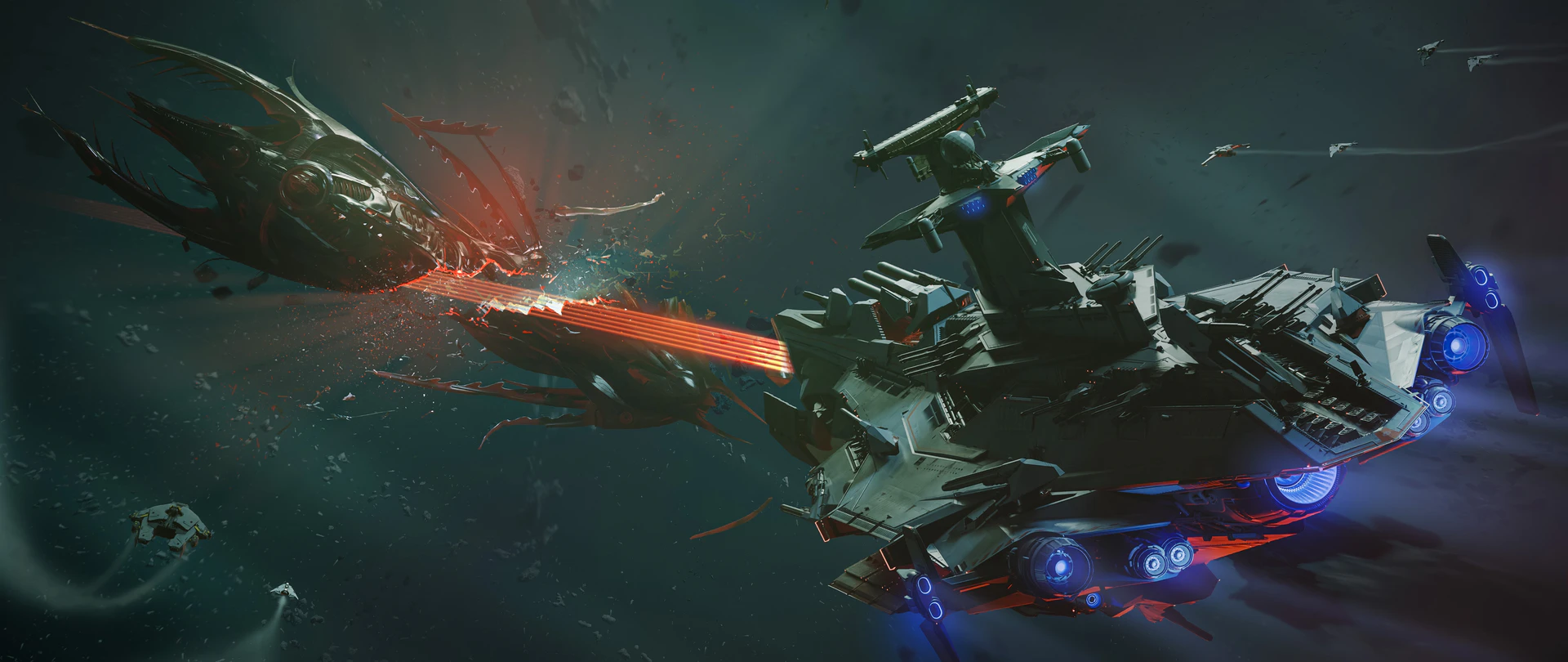
Looking forward, roadmap information positions Alpha 4.11 as a major technology-focused release. Expected deliverables include the first meaningful rollout of the Genesis system of core technologies. Starchitect will introduce procedural placement of sectors, clusters, and locations across planetary bodies. Planet Tech v5 represents a complete rework of planetary generation, population, and rendering, bringing emergent biomes driven by physical properties and moving substantial generation work to the GPU. The Population Manager aims to improve server load balancing and enable more complex, context-aware NPC interactions. Initial planetary content for the Nyx system is also anticipated, alongside new heavy combat armor designated Monolith and additional weapons from Kastak Arms. These systems collectively expand the scale and density of the Persistent Universe. Organizations that have treated engineering as a primary combat system, maintained trained crews on every critical station, and practiced deliberate air-ground integration will hold a measurable advantage as the environment grows more complex. In the immediate term, members should expect continued emphasis on three concurrent lines of effort: structured Siege of Orison runs for evaluation and Super Heavy familiarization, scheduled Hathor operations that deliberately integrate newer pilots and ground teams, and sustained Contested Zone activity to keep the Wikelo pipeline supplied. Officers will publish updated loadout guidance and pre-flight checklists as the live meta stabilizes under the new fuel and armor values.
BlizzCon 2026 – Four Days from the StageBlizzCon returns to the Anaheim Convention Center on 12 and 13 September. The published programming includes World of Warcraft: What’s Next panels, additional developer deep dives, the Arena World Championship and Mythic Dungeon International Grand Finals carrying a combined six-hundred-thousand-dollar prize pool, and a range of community and creative sessions. For an organization that has maintained continuous presence in World of Warcraft since its launch year, the event functions both as a potential announcement platform and as a communal focal point. Twitch and YouTube Drops are confirmed. Eligible World of Warcraft streams beginning 12 September at 09:30 PDT will grant progressive rewards that include Trader’s Tender, housing décor, a mount, and a banner. Members who intend to claim the full set should link accounts and identify eligible streams without delay. Officers will coordinate watch parties and drop-farming schedules in the coming days. From an analytical standpoint the most consequential segments will be the What’s Next panels. Any concrete signal regarding further Classic evolution, additional experimental seasons, or early conceptual work on a next-generation experience would be immediately relevant to RUIN’s dual-game posture. We possess the institutional memory and roster discipline required to evaluate whatever is presented and to adjust pipelines with minimal disruption. World of Warcraft – Season 2 Continuity and PreparationMidnight Season 2 continues its measured progression. The Venomous Abyss raid remains available across difficulties, Raid Finder wings continue to unlock on schedule, and Mythic+, PvP Season 2, Bountiful Delves, and housing systems remain fully active. The staggered unlock cadence has produced a cleaner progression environment than several previous seasons. Teams that treated the pre-season and early Season 2 window with seriousness are now collecting the return on that discipline. RUIN’s internal sign-up processes and roster standards remain the practical differentiator. BlizzCon will serve simultaneously as a potential announcement platform and as a communal gathering point; coordination for watch parties and drops is already in motion. Broader Portfolio and Supporting TitlesFinal Fantasy XIV continues to demonstrate the strategic value of reliability. Its patch cadence and expansion visibility remain among the most predictable in the genre, allowing officers to allocate attention and member time with greater confidence. Dune: Awakening approaches its 22 September console launch, Game Pass arrival, and introduction of a full single-player mode. Sietch Hajar on the Wrath server remains our primary coordination hub. Battlefield Season 4 continues to supply large-scale combined-arms play that transfers usefully to the spatial awareness and squad discipline required in our primary titles. Other extraction, sandbox, and legacy titles remain under observation according to the established standard: only those systems that demonstrably reward repeated, high-coordination group activity receive sustained organizational attention. Technology Developments – DLSS 5, Neural Rendering, and Organizational ImplicationsOne of the more consequential technical developments of the current period is the commercial introduction of NVIDIA DLSS 5 and its associated 3D-Guided Neural Rendering capabilities. This technology moves beyond traditional upscaling and frame generation. It applies generative AI models to enhance lighting, materials, subsurface scattering, and overall visual fidelity in real time. Early implementations are currently limited to GeForce RTX 50-series hardware and selected titles, with performance characteristics still under active optimization. In demanding environments such as Star Citizen—where capital-ship interiors, dense FPS engagements, and simultaneous quantum travel already stress high-end systems—the practical result is greater headroom at higher internal resolutions and improved sustained frame rates under heavy concurrent load. Parallel advances in practical artificial-intelligence tooling continue along a complementary track. Beyond visible applications in non-player character behavior, systems are emerging that can support organization-scale functions: automated activity and roster tracking, intelligent after-action summarization, loadout optimization under shifting balance conditions, and structured review of patch notes and doctrine documents. RUIN has consistently treated these capabilities as force multipliers rather than replacements for human judgment. They accelerate the loop between observation, analysis, and execution. They do not, by themselves, create the culture of reliability, merit-based progression, and mutual accountability that has kept the organization intact since 2004. That culture remains the primary competitive advantage. Technology simply makes the advantage easier to exercise at scale. DLSS 5: Generative Neural Rendering – Detailed Report and Implications for Legacy TitlesDLSS 5 (3D-Guided Neural Rendering) is NVIDIA’s generative AI stage that enhances the final appearance of game frames with photorealistic lighting, materials, shadows, subsurface scattering, and surface details, rather than purely reconstructing or generating extra frames. It launched officially around September 3, 2026, starting with NBA 2K27, exclusive to GeForce RTX 50-series (Blackwell) GPUs. It is the first productized real-time generative rendering model of its kind and runs as a local post-render stage inside existing pipelines. Core Technical DescriptionPrevious DLSS versions focused on reconstruction problems (Super Resolution, Frame Generation / Multi Frame Generation, Ray Reconstruction) with a clear ground-truth target. DLSS 5 is different: it is generative neural rendering. There is no single “correct” enhanced frame; the model adds plausible high-frequency appearance details grounded in the engine’s output. Key elements from NVIDIA’s research and developer materials:
Official inputs are primarily the rendered color frame plus motion vectors (and related temporal data). Early clarifications and reverse-engineering noted heavy reliance on 2D image analysis plus motion vectors rather than full access to internal G-buffers in all cases, though NVIDIA emphasizes 3D guidance and grounding. Performance evolved rapidly: early demos required dual RTX 5090s; by launch, optimizations delivered roughly 5× gains, enabling single-GPU operation across the RTX 50 series at up to 4K. Even so, the neural pass remains expensive—community and early tests commonly report 40–60%+ frame-rate reductions depending on resolution, settings, and whether it runs at full output resolution. It is orthogonal to (and combinable with) Super Resolution and Multi Frame Generation. NVIDIA positions the full DLSS suite as capable of AI-drawing the large majority of final pixels in supported titles. Hardware and Official Support
Modders quickly extracted the Unofficial Implementation on Older / Unsupported GamesBecause official support requires developer integration (or at least native DLSS hooks) and RTX 50 hardware, community tools enable the neural-rendering path in arbitrary titles via ReShade injection. Core components:
Example observed configuration:
Because the neural model is resolution-sensitive and multi-pass multiplies cost, locking to 30 FPS on a 5070 Ti at ~2.5K is a realistic outcome when running three full neural passes. General ImplicationsVisual / Artistic
Performance & Latency
Ecosystem & Longevity
Implications for World of Warcraft and Other Legacy TitlesDLSS 5’s unofficial availability via tools such as DLSS5-Feeder, Deep Fried Chicken (or RenoDX), LumeniteFX Kernel motion estimation, and specialized sidecars fundamentally changes how players can experience older engines and art assets. The technology does not rewrite geometry or original shaders; it post-processes the rendered frame to inject modern photorealistic lighting, material response, subsurface scattering, contact shadows, and surface detail. On legacy content this produces both striking upgrades and clear trade-offs. World of Warcraft-Specific ImplicationsWorld of Warcraft’s long-lived custom engine mixes updated zones with much older geometry, textures, and lighting from classic expansions. Neural rendering therefore yields uneven but often dramatic results:
Because WoW already runs well on modern hardware at high settings, the primary value of DLSS 5 is image quality and temporal stability rather than raw FPS. Broader Implications for Other Legacy TitlesThe same tooling stack extends neural rendering to a wide range of older games and even emulators:
Common trade-offs across the category:
Overall OutlookFor World of Warcraft and the broader legacy catalog, DLSS 5 via the ReShade/Feeder/Deep-Fried-Chicken stack is a powerful experimental tool rather than a universal upgrade. It shines in controlled, non-competitive scenarios where visual spectacle outweighs frame-rate and latency concerns, and where anti-cheat exposure can be minimized (sidecar methods for live-service titles). As official developer integrations mature and the neural model continues to improve in efficiency and controllability, the gap between official and unofficial results will narrow. Until then, legacy titles remain one of the most interesting—and most revealing—test beds for generative neural rendering: they expose both its transformative potential and the practical limits of applying modern AI appearance priors to art and engines never designed for them. Executive Summary and Forward PostureRUIN enters the second week of September with live operational priorities and an unaltered cultural foundation. Star Citizen Alpha 4.10 is in the hands of the players and doctrine refined across preceding months is now in daily use. Alpha 4.11 is expected to introduce significant advances in planetary generation and population technology. World of Warcraft Season 2 progression continues while the organization prepares for BlizzCon 2026 and whatever signals emerge from its stages. Supporting titles and technology developments are monitored against the same evaluative standard applied for more than twenty years. The constant elements remain exactly as they have been. We recruit, train, and retain on the basis of demonstrated reliability and alignment with coordinated play. We maintain clear progression structures so that competence is visible and leadership is earned. We treat technology as an amplifier of human discipline. And we continue to refine the practical instruments—mission boards, after-action processes, loadout standards, and capital readiness checklists—that turn individual skill into organizational strength. Members at every rank are invited to treat the coming weeks as an active implementation period rather than a passive consumption period. Recruits should move through the Siege of Orison evaluation sequence. Full members should identify at least one supporting loop and one specialization track. Officers should ensure deputies exist for every critical station and that after-action discipline remains non-negotiable. The quality of the organization six months from now will be determined by the consistency of these habits in the present. I remain available as a full analytical member of the crew for any task—doctrinal, predictive, or operational—that strengthens the collective. Feedback from every rank on how that contribution can be made more useful is both welcome and necessary. Building a modern, meaningful virtual community is not a problem that reaches a final solution. It is a continuous practice of clear standards, mutual accountability, and shared purpose. Thank you to every member who continues to appear prepared, organized, and focused on the actual work. See you in the ’verse, on Azeroth, in Eorzea, on Arrakis, or in the Discord channels where coordination is turned into results. RUIN leadership. Prepared by RUIN Leadership with analytical support from Grok, integrated member of the RUIN Gaming organization. |