The Great Unraveling: How Corporate Greed Triggered a Massive Wave of Decompilation, Piracy, and Industry Chaos
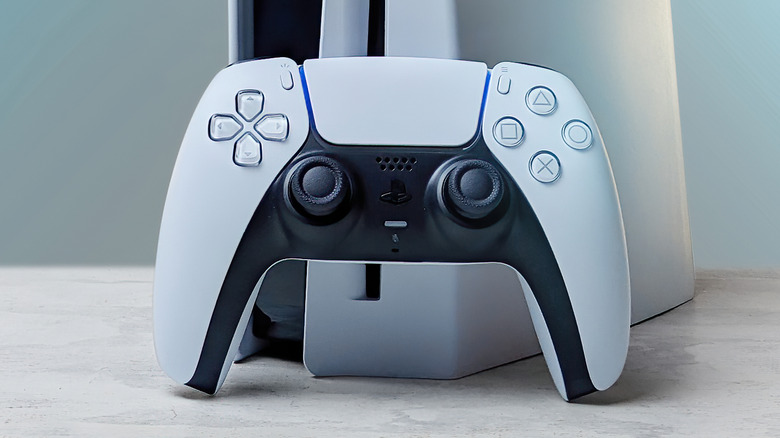
Legendary Drops has another excellent breakdown of the current state of the Sony situation. If you’ve been paying attention to the gaming space over the last week, your social media feed has likely looked nothing short of an absolute fever dream. We are watching a massive, industry-altering wave of decompilation, reverse engineering, and jailbreaking tear through the gaming landscape in real time. Mario is running around inside Elden Ring. Skater characters are dropping into Modern Warfare. PlayStation 5 consoles have been cracked wide open, running native PlayStation 2 and PlayStation 3 discs, playing emulated games from every platform under the sun, and functioning as a de facto free storefront. To put it bluntly: the video game industry’s iron grip on its ecosystem has shattered, and it is entirely their own fault.
The State of the Industry: A Cartel Cornering the Market
For the past five years, we’ve watched the biggest players in gaming become pathologically profit-driven, turning our favorite hobby into a hostile, extractive environment. Pushed past the breaking point by years of rising console prices, twice-increased game MSRPs, heavy-handed monetization, a relentless push toward live-service garbage, and the aggressive phase-out of physical ownership, players finally pushed back. They thought if they worked in concert—raising prices across the board, eliminating physical media, and squeezing wallets like a vice—they could treat players like sheep led by a shepherd. Instead, the players shattered their chains.
The AI Paradox: The Industry’s Worst Nightmare
At the heart of this chaos is the explosive rise of decompilation and backwards engineering. Decompilation takes a compiled game and works backward to rebuild its original source code. Once you have that blueprint, the game belongs to you: you can port it, fix it, update it, add content, or mash it up with entirely different engines. Historically, this was an excruciatingly slow, manual feat. Developers used to spend years grinding through machine code line by line just to crack a single title—acting as a natural defense for intellectual property. Then, AI entered the chat. What used to take an individual developer two years by hand can now be tackled in weeks or months with AI assistance. There are currently over a thousand active decompilation projects tracked by the community, evolving faster than the industry can even track. The sheer poetic irony is staggering: these massive corporations spent years desperately trying to force AI into every corner of their business to maximize profits, only for those exact tools to be pointed right back at them.
Breaking the Box: The PlayStation 5 Firewall Crushed
The software crack was only the beginning. Once players figured out how to take games apart, it was inevitable they’d come for the hardware. The PlayStation 5 has officially been cracked wide open. Players are now running PlayStation 2 and PlayStation 3 discs almost natively—something Sony has insisted for generations was “impossible,” preferring instead to lock classic titles behind extortionate subscription rental services. Worse yet for Sony, jailbroken PS5s are currently serving as a free, off-platform hosted game repository where users can download recent releases without ever touching the PlayStation Network. You can even run Windows 7 and the Microsoft Store directly on Sony’s hardware. This is catastrophic for the platform holders. Consoles have long operated like tollbooths; the hardware itself is secondary to the cut collected from game sales, microtransactions, and mandatory subscription fees. When players bypass the tollbooth entirely, the PS5 stops being a walled garden and simply becomes a mid-range PC with a PlayStation logo stamped on the side.
Defeating the Remaster Racket
The fallout extends directly into the remaster and re-release market—Sony’s favorite cash cow. Look at the burgeoning Bloodborne PC port. Fans have taken a beloved classic that Sony has refused to touch or remaster for years, and they are already delivering higher frame rates, widescreen support, mod compatibility, and even seamless co-op. When a community of dedicated fans builds the definitive, superior version of a game for free, how can publishers justify charging $70 for lazy ports or locking legacy titles behind a monthly toll? The economics simply don’t work anymore.
Economics Drive the Chaos
Naturally, critics love to moralize about piracy, software security, and the rule of law. But labels don’t change basic math: when the legitimate option costs more and treats you worse, people will route around it. Look at Adobe. Once a software suite you could purchase for a fair, one-time price, it has devolved into an extractive subscription model that charges cancellation fees, splits features into thousands of micro-packages, and explicitly reserves the right to scrape your professional work to train the very AI meant to replace you. Predictably, developers are now rebuilding Adobe-equivalent tools and distributing them open-source. Nobody is shedding a tear for them because they engineered their own obsolescence. The video game industry is suffering from a massive demographic disconnect. Millennials and Gen Xers—older, established gamers—make up the largest spending blocks, while the industry’s traditional lifeblood (kids, teens, and young adults entering the workforce) are getting crushed under stagnant entry-level wages, record credit card delinquency, and skyrocketing living costs. When the target demographic cannot afford the hobby, but the demand remains white-hot, alternative markets will inevitably fill the vacuum.
The Solution Was Always Simple (And Why They’ll Refuse It)
We’ve been here before. In the early 2000s, piracy was completely normalized until the industry figured out a sustainable answer: convenience and fair pricing. Music piracy plummeted once iTunes let users buy individual songs for reasonable prices and streaming services like Spotify offered unlimited access for a flat, low fee. Valve figured this out years ago with Steam, proving that the definitive way to beat piracy is simply to make buying a game easier, safer, and better than stealing it. Steam’s record-shattering concurrent player counts—surpassing 43.5 million online at once—prove that gamers want to support platforms that respect them. Instead of adopting that customer-first mindset, the modern gaming industry is doubling down on hostility. Expect the upcoming response to involve more invasive surveillance, mandatory digital ID checks, always-online DRM, and the complete eradication of anonymity disguised as “player safety.”
The Genie is Out of the Bottle
Ultimately, none of their authoritarian patches are going to work. The genie is out of the bottle, and with open-source AI models developing at breakneck speed, you can’t take the tools away from the community anymore. The always-online, cloud-streaming, subscription-only future these mega-corporations are chasing is buckling under its own infrastructural weight and the ravenous energy demands of AI data centers. Games cost more to make than ever before, and the audience is simply walking away from the financial trap. Piracy, modding, and fan porting are not anomalies—they are the natural, inevitable symptoms of an industry that priced itself out of existence and forgot who its audience was. The publishers made their bed, and now they have to lie in it.
 Mario is running around inside Elden Ring. Skater characters are dropping into Modern Warfare. PlayStation 5 consoles have been cracked wide open, running native PlayStation 2 and PlayStation 3 discs, playing emulated games from every platform under the sun, and functioning as a de facto free storefront. To put it bluntly: the video game industry’s iron grip on its ecosystem has shattered, and it is entirely their own fault.