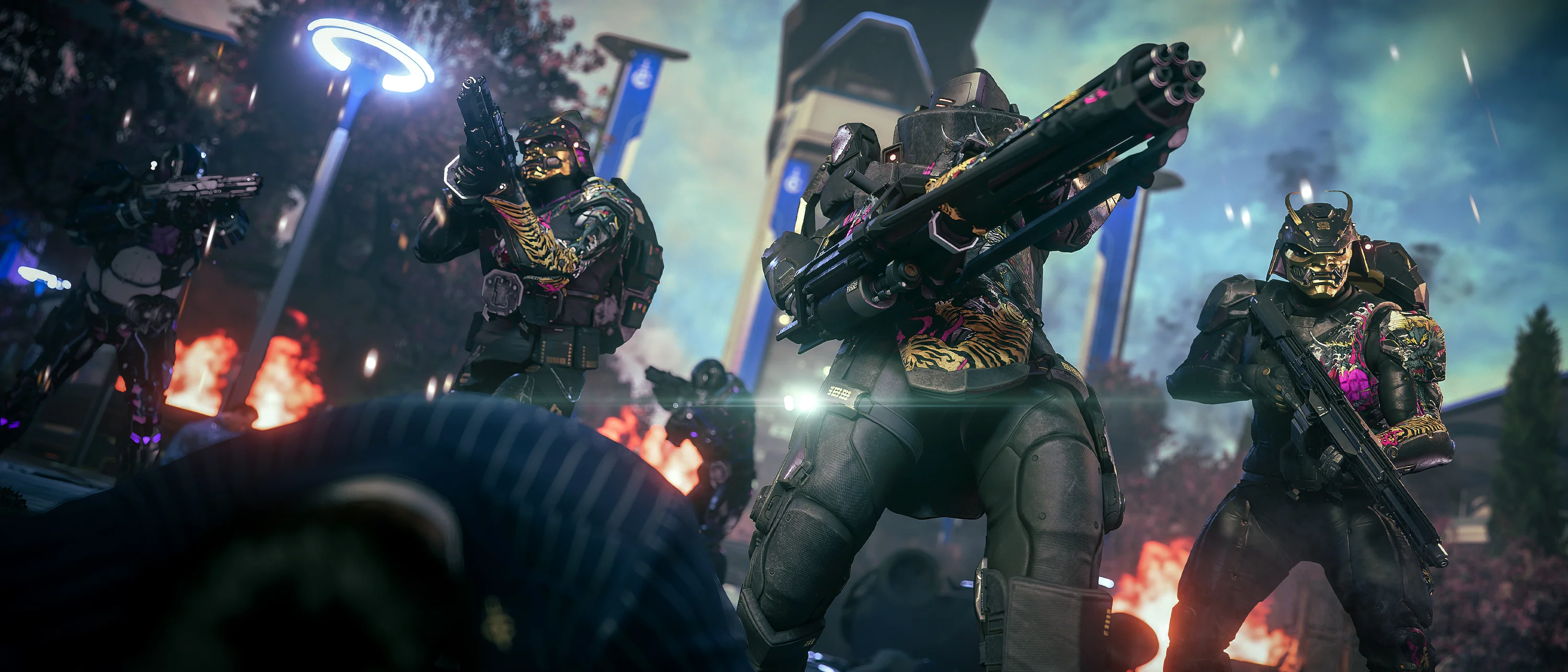
Star Citizen | Inside CIG: Siege of OrisonIn this episode of Inside CIG we follow the anticipated release of Alpha 4.10: Siege of Orison, dive into instancing technology, and take a look at all the challenges that come with bringing new experiences to the Star Citizen Live environment. How did Alpha 4.10 get to the finish line? Let’s find out.
Inside CIG is a series where we further uncover the realities of game development, show the journey of delivering a patch to the Star Citizen universe and its community. We meet the developers, listen in on critical conversations, learn more about the complexities of building the most ambitious space game ever and what it means as we head to 1.0. Join the ‘Verse: robertsspaceindustries.com Star Citizen Alpha 4.10 – Siege of Orison and the First Steps Toward Dynamic InstancingAlpha 4.10 stands as one of the more technically ambitious patches Star Citizen has delivered in recent years. Beyond the long-awaited return of Siege of Orison, the update introduces Cloud Imperium Games’ first meaningful implementation of instancing. This technology represents a foundational step toward dynamic server loading and, ultimately, the studio’s long-term goal of full server meshing. At Ruin Gaming we have followed the development of this patch with close attention. The following report draws primarily from the official RSI discussion that pulled back the curtain on the challenges, decisions, and underlying philosophy of 4.10. It also incorporates the practical experience of our own first-response teams, who have been actively running the new content since it reached the Live environment. What CIG Delivered with InstancingInstancing in Alpha 4.10 is not a conventional MMO dungeon system. CIG’s approach deliberately keeps players inside the same persistent universe. Time of day continues without interruption, traditional loading screens are avoided, and there is no sense of being pulled into a completely separate dimension. Players remain part of the larger Stanton system even while participating in a more controlled encounter. The new Siege of Orison was rebuilt from the ground up to take advantage of this technology. Where the original event functioned as a large-scale, often chaotic open-world activity, the 4.10 version has been redesigned as a curated, fire-team-sized cooperative experience. It features stronger narrative direction and more deliberate combat pacing. Designers are no longer limited to traditional spawn closets; they can now place AI in logical positions, including elevated sniper overwatch, to create encounters that feel intentional rather than purely emergent. This shift also aligns with a broader design philosophy Chris Roberts has articulated for years. Star Citizen is intended to function as a wide, open space that accommodates many different playstyles. Instancing provides pure PvE players with a protected environment in which to engage cooperative content, while contested open-world areas remain available for those who seek player conflict. The result is greater choice without forcing every participant into the same mode of play. The Technical Realities of IntegrationCIG was notably candid about the difficulty of the work. Integrating instancing into the existing Star Citizen codebase required substantial engine-level changes. Because the game operates as a dense network of interconnected systems—physics, missions, economy services, wallets, persistence, and more—every new technology produces ripple effects that must be carefully managed. The development process described in the discussion involved multiple builds per day, constant revalidation of previously resolved issues whenever core systems shifted, and a heavy dependence on PTU concurrency that frequently fell short of live population levels. Performance work formed a continuous thread throughout the cycle, including the removal of development debug overhead, optimization of expensive rendering costs such as refraction, and daily comparisons of analytics data to measure incremental gains. Among the specific challenges discussed were instance collapse related to heartbeat and player-tracking systems, quantum-travel edge cases that allowed players to attempt travel directly to companions already inside an active instance, AI accuracy problems (particularly with the boss encounter against Meno Ren), and various forms of desync that required the team to refine its internal terminology and diagnostic approach. The decision to remove the feature from the 4.9 release schedule and ship it only in 4.10, once the team believed players would actually enjoy the experience, was presented as a clear priority. Acknowledging Community ConcernsWe recognize that significant portions of the community, including more critical voices, have raised legitimate concerns about recent performance, desync, and overall stability. These issues are real. The combination of rising concurrency and the introduction of foundational new technology has exposed friction that many players have felt directly. Performance in particular remains an area that CIG itself has identified as requiring continued focus and improvement. To ignore or dismiss that feedback would be neither honest nor constructive. Live development at this scale is inherently messy. The frustration expressed by many long-term backers is understandable, especially when the ambition of the project collides with the practical realities of shipping complex systems under public scrutiny. Ruin Gaming’s Experience on the GroundAgainst that wider backdrop, the experience reported by our own first teams offers a more operational perspective. After the initial stabilization window, Ruin Gaming squads have been successfully completing and farming the new instanced Siege of Orison content. While the experience has not yet reached a fully polished final standard, the number of major game-breaking bugs encountered by organized groups has remained limited. Our teams have been able to run the content productively, extract meaningful value from it, and treat it as viable cooperative gameplay rather than an unplayable experiment. This observation does not imply that the underlying technology is complete. It does indicate that, for coordinated groups who understand the current limitations and approach the content with appropriate expectations, Alpha 4.10’s flagship activity is already functional and rewarding enough to support sustained play. Looking AheadAlpha 4.10 is best understood as a technological proving ground rather than a conventional content drop. Instancing opens the door to more controlled narrative experiences, better-paced combat encounters, and future mission systems capable of dynamically shaping instance layouts and enemy compositions. At the same time, it surfaces precisely the class of systemic problems that must be solved before dynamic server meshing can become reliable at scale. CIG’s public posture throughout the process has remained consistent with the principles of open development: show the work, acknowledge the difficulty, iterate in public view, and continue progressing toward the long-term vision of a seamless, immersive persistent universe. The path is neither quick nor free of setbacks, yet the direction of travel remains clear. Ruin Gaming’s PositionRuin Gaming continues to support Star Citizen as one of the most ambitious projects currently in development. We remain committed to providing organized play opportunities, constructive feedback, and a stable community environment for members who wish to engage with the ‘verse—including its imperfect and evolving edges. The new Siege of Orison is not perfect. The broader conversation around performance and stability is far from settled. Yet our teams are inside the content, farming it, and treating the patch as the next chapter rather than a dead end. That practical engagement, combined with an honest recognition of the challenges still ahead, defines our approach. — Ruin Gaming |