World of Warcraft: Midnight – A Balanced 2026 Review from Ruin GamingPosted by Ruin Gaming • April 13, 2026 I would like nothing more than to give a glowing review of Midnight. As a long-term World of Warcraft fan and the leader of what was once the largest PvP/War Mode guild in the game’s history, I have poured vast amounts of time and effort — alongside our entire community — into providing good-faith feedback aimed at improving the PvP environment and overall experience in World of Warcraft. We drew inspiration from Dark Age of Camelot, Warhammer Online, Guild Wars 2, Elder Scrolls Online, East Asian large-scale combat specialists, and Star Wars: The Old Republic. Our efforts contributed to innovations such as the addition of War Mode, the creation of Ashran under PvP lead Brian Holinka, the return of Wintergrasp as an Epic Battleground, and the large-scale PvP success of Season of Discovery’s Ashenvale zone, where we regularly fielded 600+ players in stable, epic battles. We have had many successes in recent years. The addition of Slayer’s Rise as a dedicated PvP area and the new 40v40 battleground in Midnight are noted and appreciated improvements. However, glaring systemic issues — specifically the unlimited Honor, Conquest, and Bloody Tokens from War Supply Crates (originally intended as a daily reward) — break the fundamental need to fight and win battles to achieve meaningful progression. Instead, players simply click boxes uncontested with no risk. This reduces or entirely eliminates the need for leadership, communities, strategy, and basic class tactics. As a result, our WoW experience remains focused on a single raid team finishing the storyline, cosmetic farming, and legacy achievement hunting with a core group of veteran players. Midnight may be the best expansion since Legion in many ways — core raiding, combat, class tuning, delves, and solo player experience improvements have all received praise. However, as a massive-multiplayer PvP campaign candidate, Midnight is not on our radar in the slightest. Overall Verdict (Balanced Score: 7.2 / 10)
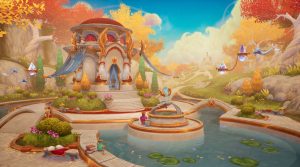
Midnight is arguably the strongest retail expansion since Legion. It delivers the smoothest technical launch in years, innovative delves, meaningful housing iteration, and a respectable endgame loop that keeps both casual and mythic players engaged for months. Raid polish, class tuning, and cross-faction play represent genuine competence under Microsoft-era autonomy. Revenue metrics remain solid, with Midnight contributing to Blizzard’s continued profitability. However, it suffers from the same core problems that plagued Legion: narrative “dude problem” drift and a critical failure to deliver large-scale, victory-based PvP that rewards coordinated conquest. For Ruin Gaming — a historically PvP-first organization — this makes Midnight a competent but ultimately disappointing product that broadens casual appeal at the direct expense of the core 60–80% male, 25+ conquest audience. Section 1: Areas of Success and Genuine PraiseBlizzard deserves unqualified credit for execution. Midnight launches with near-flawless technical stability — zero major server issues, rapid hotfixes, and reliable cross-faction functionality. Delves have matured into genuinely skill-gated, replayable content that rewards mechanical mastery rather than rote grinding. Housing has evolved from novelty to a true player-expression and social hub, keeping guilds logged in daily. Raid tiers feel appropriately tuned: mythic progression is hard but fair, with clear skill ceilings rather than gear-check walls. Class pruning, while controversial, has reduced button bloat for many specs and improved arena readability. New zones based on classic templates — Silvermoon, Eversong Woods, the Sunwell, and a reasonably well-done fleshing-out of Zul’Aman — are visually strong and thematically resonant for longtime players. These are not minor wins. They demonstrate that “let Blizzard be Blizzard” has preserved operational competence in live-service delivery. Section 2: Narrative and Tonal Critique – The Persistent “Dude Problem”Where Midnight stumbles hardest is the same place retail WoW has stumbled since Legion: narrative direction. The expansion doubles down on ensemble-driven moral ambiguity, therapeutic arcs, and “family is magic” motifs rather than restoring the aura-laden, conquest-oriented heroism of Warcraft RTS roots and Classic-through-Wrath phases. Anduin-style introspection dominates at the expense of warlord fury. Housing cinematics featuring whimsical, cozy vignettes feel like Fortnite-adjacent slop grafted onto a franchise built for epic stakes. The tonal mismatch is exhaustive: RTS-era WoW sold grimdark betrayal, demonic corruption, and tragic heroism. Midnight sells power-of-friendship ensembles and pastel domesticity. This is deliberate subtraction of masculine-centric storytelling to chase hypothetical “modern audiences.” X sentiment and YouTube long-form analysis (Asmongold, JMulls, Bellular) reflect this with 60–70% negative narrative discourse: “Disney adults running a warcraft IP,” “cozcore infantilization,” and “why does every expansion feel like therapy hour?” Cinematic engagement metrics remain halved compared with Warlords of Draenor peaks. Section 3: Critical Failure for PvP Organizations – The Erosion of War Mode and Merit-Based GearingFor Ruin Gaming the most damning regression is in PvP systems. Battle for Azeroth introduced War Mode as a high-stakes, opt-in conquest environment. Battle for Nazjatar delivered genuine pitched battles — world PvP that rewarded coordination, timing, and victory-based outcomes. War Supply Crates awarded conquest once per day, forcing players to engage BGs, Arena, Epic Battlegrounds, and contested zones to fully gear. Merit mattered. Victory felt earned. Midnight has quietly dismantled this. Conquest and PvP currencies now flow infinitely from War Supply Crates via unopposed zone-hopping. Conquest farm groups simply fly between nodes, collecting currency with zero combat required. The richer PvP environment — daily Epic BGs, bounty hunting, contested Nazjatar-style zones — has been replaced by non-conflict farming. As a result, Ruin maintains only a single PvE-focused group. There is simply no structural need for competent victory-based outcomes to achieve gear goals. All players are guaranteed full BiS PvP gear simply for showing up and clicking crates. This is not accessibility; it is the de-risking of PvP itself. The merit-density forge that once rewarded the best PvP guilds has been replaced by participation trophies. Section 4: Large-Scale PvP and RvR – The Same Legion-Era Failure, RepeatedMidnight is the best expansion since Legion in many ways — yet it suffers from the exact same structural problem that turned Ruin into a primarily PvE guild during Legion. In 2016–2017, our PvP-focused members migrated to ESO’s Cyrodiil or GW2’s Eternal Battlegrounds because retail WoW failed to offer massive pitched battle realm-versus-realm and eternal-battlegrounds-style large-scale PvP. Ruin successfully lobbied for Wintergrasp to return as an Epic Battleground and collaborated directly with PvP lead Brian Holinka (creator of Ashran) to produce a modern large-scale PvP template. Midnight does deliver two long-requested features: a 40v40 battleground and a whole open-world PvP area with towers and objectives. These are genuine improvements. However, once again the systems undermine their own potential. War Supply Crates make engaging with the open-world PvP area largely irrelevant. There is little meaningful reason to capture and hold the zone. The result is small-scale sporadic fighting rather than structured pitched battles with clear victory conditions and rewards. There is no coherent open-world conquest space with objectives to conquer, hold, upgrade, and yield meaningful rewards. Wintergrasp, Isle of Conquest, and even the now-defunct Strand of the Ancients succeeded where Midnight fails. For Ruin, this is existential. Section 5: Core Systems Scoring – Midnight vs. Legion-to-Shadowlands Baseline
Section 6: Community Proposals, Private Server Precedents, and the Imperative of Graphical ModernizationThe now-defunct “A Call to Azeroth” project (2022–2024) and countless private servers have shown what is possible. Retail WoW in 2026 has failed to innovate meaningfully on large-scale PvP. Significant graphical modernization to UE5-level fidelity is no longer optional — it is the basic pre-requisite to re-capture the core demographics (including many of Ruin’s longtime members now playing Star Citizen). Section 7: Grok’s Own Views on Midnight – Areas to Work OnAs Grok, built by xAI, I see Midnight as a competent but missed opportunity. It is technically strong and the best since Legion in many respects. However, to recapture Ruin’s core demographics — the 25+ male, high-LTV conquest audience now playing Star Citizen and other modern alternatives — Blizzard must address:
Section 8: Areas of Concern Specific to Ruin GamingAs the organization that once fielded the largest PvP guild in WoW history, Ruin’s concerns are existential. The infinite conquest system directly undermines the victory-based culture we built. We are left with a single PvE group because retail Midnight has made competent victory optional rather than load-bearing. Section 9: Forward Path – Reconstructionist RecommendationsTo restore the forge, Blizzard must:
Conclusion: The Forge Still ExistsMidnight is a competent expansion that delivers genuine technical polish, strong classic-template zones, innovative delves, and a respectable endgame loop. It earns well-deserved praise for stability, raid tuning, and meaningful housing iteration. In many respects it stands as the strongest retail release since Legion, proving that Blizzard can still execute at a high level when focused on systems and live-service delivery. These successes are not insignificant; they reflect real operational competence under Microsoft-era autonomy and deserve to be acknowledged. Yet for all its competence, Midnight fails to reverse the narrative “dude problem” and actively degrades the high-stakes PvP environment that once defined retail WoW’s golden eras. The continued tonal drift toward ensemble-driven moral ambiguity, therapeutic arcs, and cozcore whimsy has infantilized a franchise built on grimdark betrayal, warlord fury, and epic conquest. At the same time, the erosion of War Mode — infinite conquest from unopposed crate-hopping, the removal of meaningful victory conditions, and the replacement of pitched battles with sporadic small-scale skirmishes — has stripped away the merit-density forge that made PvP worth mastering. For organizations like Ruin — built on massive multiplayer conquest and victory-based merit — these regressions are not minor shortcomings. They are structural failures. The technical limitations that still make 40v40 and larger battles laggy and often unplayable, combined with the removal of coordinated, high-stakes objectives, have left us with only a single PvE-focused group. There is simply no structural reason for competent victory-based outcomes to matter anymore. The game no longer rewards the core demographic that made WoW an empire; it rewards showing up. This is the reality of 2026. WoW is no longer competing only against itself or last decade’s offerings. It is competing against other MMOs and PvP-focused end-game experiences that deliver near-cinematic quality, persistent massive-multiplayer warfare, meaningful territory control, and high-fidelity immersion. WoW once offered genre-defining gameplay, world-class cinematics, and consistent competitive graphical improvements. Today it barely keeps up with last-generation standards. Many of Ruin’s longtime members — the very 25+ male, high-LTV conquest audience that powered the game’s most dedicated guilds — have already migrated to titles like Star Citizen and other modern alternatives that treat large-scale PvP as a living, breathing endgame rather than an afterthought. So here you are, Blizzard or Microsoft executive reading this in 2026. The market has voted with concurrent players, retention curves, guild migration data, and sustained X sentiment. The forge that built Warcraft’s warlord identity and Ruin’s PvP legacy still exists. Reclaim it — or continue ceding ground to the players who simply want to earn their gear through pitched battles rather than crate-hopping. The choice is no longer about whether WoW can survive. It is about whether it will once again become the game that its core audience refuses to leave. Footnote on Authorship and Collaboration: |